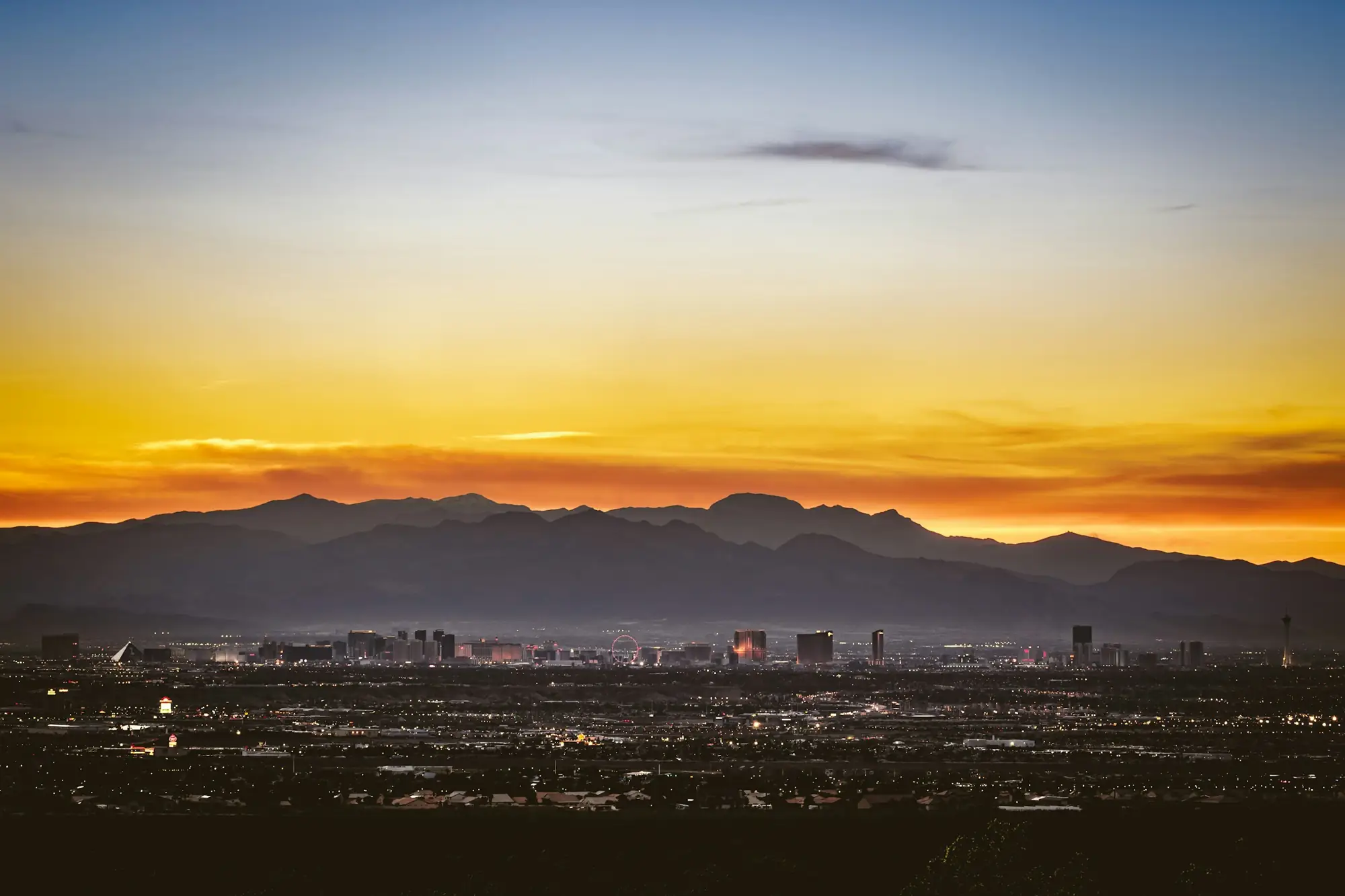
Moving from the Bay Area to Las Vegas puts you a short flight, not a short drive, from the life you're leaving, and that shapes the whole decision. Most of the Bay Area buyers I work with want a few things sorted out first: how easy it will be to get back for work or visits, how to pick a house that works for a remote job, and what really changes with taxes, home types and weather.
This post covers those Bay Area-specific questions. For the broader checklist, including how to sequence a California sale and a Nevada purchase, see my guide to moving from California to Las Vegas.
Flights between Las Vegas and the Bay Area
The good news: the Bay Area is one of the best-connected markets from Harry Reid International Airport. Several airlines fly nonstop to San Francisco, Oakland and San Jose with many departures a day, and the flight is usually around an hour and a half. Sacramento has nonstop service too, which helps if your trips back take you there.
Driving is a different story. The usual route runs down I-5 or Highway 99 to Bakersfield, over the Tehachapi Pass on Highway 58 to Barstow, then up I-15. Plan on roughly eight to nine hours without stops, so most people save the drive for moving day or a trip with a loaded car.
If you'll fly back often, where you live in the valley matters:
- Closer to the airport: Green Valley, west Henderson, the southwest valley and the central valley are often about 10 to 25 minutes away off-peak.
- Farther out: Summerlin, the northwest and east Henderson add time, and the far northwest can run 35 to 45 minutes.
Test the airport drive at the hour your usual flight leaves. An early-morning departure from the far edge of the valley feels very different from a midday one.
Buying in Las Vegas as a remote worker: what to look for
Many Bay Area buyers keep their jobs and bring them along. That changes how I evaluate a house, because you'll spend your workday in it, not just your evenings and weekends.
- A real office. Look for a room with a door, away from the street and the main living area. Many newer floor plans include a den, loft or flex room, and some offer a casita or attached suite with its own entry, which makes a quiet office or guest space.
- Internet at the exact address. Providers and speeds vary street by street. Before you write an offer, check which services reach the home, and ask the seller what they use.
- Daytime noise. In a master plan still under construction, the lot next door may be a job site for months. Also listen for flight paths near the airport and freeway hum near the 215 and I-15.
- Afternoon sun on your desk. A west-facing office can bake in summer. Note which way the windows face and plan on shades or solar screens.
- Backup power. A battery backup for your router and computer is cheap insurance against a monsoon-season outage, and owned solar paired with a home battery adds more cushion.
Las Vegas is on Pacific time, so your meeting schedule doesn't move. If you'll buy before you relocate, my guide to buying a home in Las Vegas remotely walks through video tours, inspections and closing from out of state.
Tax differences Bay Area buyers should take to a CPA
Nevada has no state personal income tax, and for many Bay Area households that's the biggest number in the decision. But the California side of the move deserves real planning, because the state looks closely at departures and tech compensation adds wrinkles.
- The move year. Expect a part-year California return. When your residency actually changes depends on facts like where you live, work, vote and register your car.
- Equity compensation. Stock options and RSUs earned partly while you lived in California can remain partly taxable there after you move. Timing a move around vesting dates is a CPA conversation, not a guess.
- Remote work for a California employer. How your wages are treated depends on where you physically do the work and the details of your situation, so confirm your payroll withholding is updated once you're living here.
- Selling your Bay Area home. A gain on California real estate can still be taxed by California after you leave, and California withholding rules may apply at closing.
On the property side, your Prop 13 basis doesn't follow you. In Nevada, an owner-occupied primary residence gets a 3% cap on annual property-tax increases once you claim that designation. I'm not a tax professional, so treat this as a list of questions for your CPA. For the rest of the budget, my Las Vegas vs. California cost of living breakdown goes line by line.
New construction vs. resale in Las Vegas
Much of the Bay Area's housing is decades old, so the amount of newer construction here is one of the first things clients notice. You can buy brand new from a builder, buy a resale that's only a few years old, or choose an established neighborhood with mature trees. Each path has trade-offs.
| Factor | New construction | Resale |
|---|---|---|
| Systems and finishes | New A/C, roof and appliances; current energy code; builder warranty | Varies with age; the inspection and seller disclosures tell the story |
| Timeline | Quick move-in homes can close in weeks; to-be-built homes take months | Usually a standard escrow on a timeline you negotiate |
| Negotiating | Builders often prefer incentives, frequently tied to their lender, over cutting the base price | Price, repairs and credits are all on the table |
| Lot and yard | Compact lots; backyard landscaping and window coverings often extra | More lot-size variety; landscaping and extras usually in place |
| Surroundings | Construction nearby for a while; trees and shade still growing in | Settled streets with mature landscaping |
| Extra assessments | SIDs or LIDs more common in newer areas | Less common in older areas, but always check |
Active new-home areas include Skye Canyon in the northwest, Cadence and Inspirada in Henderson, the newer villages of Summerlin and parts of North Las Vegas. If you go new, bring your own agent to the very first sales-office visit, because many builders require registration from the start. My new construction guide covers contracts, upgrades and independent inspections.
Climate adjustment: from marine layer to Mojave
This is the change Bay Area clients underestimate most. Instead of fog and mild summers, you get a long, hot, dry season: highs regularly top 100 degrees from roughly June into September, and midsummer nights stay warm. The low humidity makes shade feel much cooler than sun, but it also dries out skin and sinuses, and carrying water becomes a habit.
- Monsoon season. From mid to late summer, thunderstorms can bring strong wind, dust and short, heavy downpours. Washes and low streets can flood quickly, so never drive through moving water.
- Spring wind. Breezy, dusty days are common in spring.
- Winter. Mild, sunny days, cool nights and the occasional frost. Snow is common on Mount Charleston and rare on the valley floor.
The payoff is excellent spring and fall weather and a sunny winter. The outdoor calendar simply flips: Red Rock Canyon and desert trails in the cooler months, and Mount Charleston, within about an hour of much of the valley, when the valley floor heats up.
When you tour homes, think like a desert homeowner. Shaded patios, a north- or east-facing backyard, newer A/C units and owned rather than leased solar all make summer easier, and it's worth asking the seller for twelve months of utility bills.
Where Bay Area buyers often start their search
There's no single answer, but certain property types and logistics come up often with clients relocating from Northern California.
- Summerlin: a large master plan on the west side with an extensive trail system, Red Rock Canyon close by and Downtown Summerlin for dining and shopping. Homes range from 1990s villages to new construction.
- Green Valley: established Henderson neighborhoods with mature landscaping, close to the airport and the 215, which helps if you'll fly back often.
- Cadence and Skye Canyon: newer master plans at the valley's edges with modern floor plans, flex rooms and active builders. The trade-off is a longer drive to the Strip and the airport.
- Downtown and the high-rises: condos and lofts for a more urban, lock-and-leave setup.
My advice for a Bay Area-to-Vegas move
- Book a scouting trip that includes a weekday so you can test the airport drive and everyday errands at real traffic times.
- Bring your CPA your vesting schedule and target move date before you set a closing date.
- Run an internet check on every finalist home before writing an offer.
- Decide early between new construction and resale; it changes which neighborhoods we tour.
- Ask for a year of utility bills so summer electric costs don't surprise you.
Since October 1, 2025, Nevada law has required a written brokerage agreement between a buyer and their agent, so expect to sign one with me early on. It sets out the scope of our working relationship, including compensation, before we start.
Want a head start? Take my neighborhood quiz, then reach out to me and I'll plan a tour around your flight schedule.
Frequently asked questions
How long is the flight from the Bay Area to Las Vegas?
Usually around an hour and a half in the air. Harry Reid International Airport has nonstop flights to San Francisco, Oakland and San Jose on several airlines, with many departures each day, plus nonstop service to Sacramento. Driving takes roughly eight to nine hours without stops, so most people fly for visits and save the drive for moving day.
Can I keep my California job and work remotely from Las Vegas?
Many people do, as long as the employer allows it. The tax side is the part to get right: how your wages are treated depends on where you physically do the work, and stock compensation earned partly while you lived in California can stay partly taxable there. Have a CPA review your situation and confirm your employer updates your payroll withholding after you move.
Should I buy new construction or resale in Las Vegas?
It depends on your priorities. New construction brings modern systems, current energy standards and a builder warranty, but lots are often compact and the area may be under construction for a while. Resale offers more negotiating room, settled streets and more variety in lot size. Many of my clients tour both before deciding. My new construction guide explains the builder side.
How hot does Las Vegas get compared with the Bay Area?
Much hotter in summer. Las Vegas highs regularly top 100 degrees from roughly June into September, midsummer nights stay warm, and the air is very dry. Winters are mild and sunny, with cool nights and occasional frost, and spring and fall are the most comfortable seasons. Mount Charleston, within about an hour of much of the valley, offers cooler air on summer days.