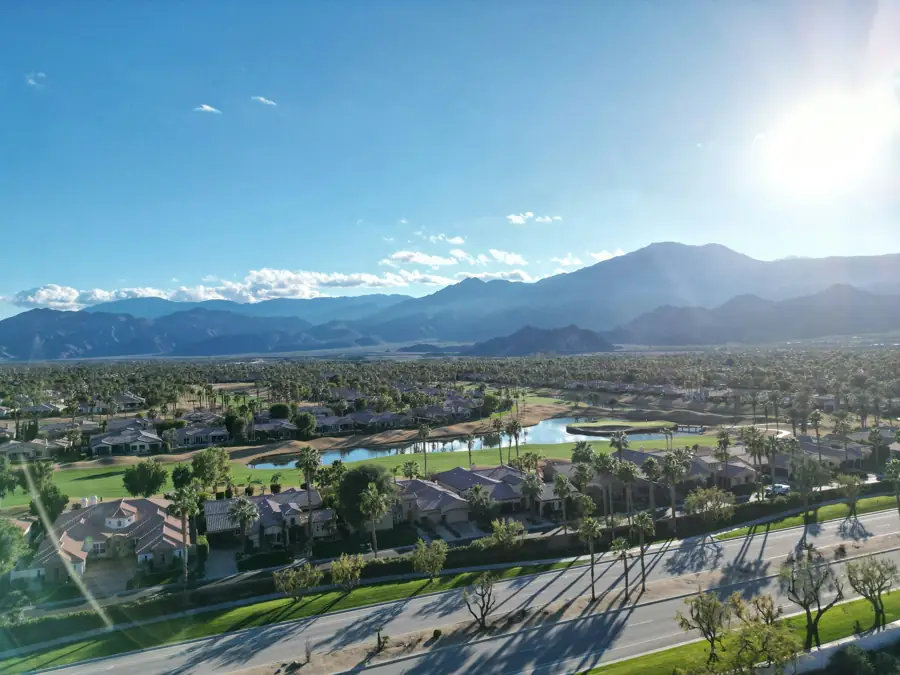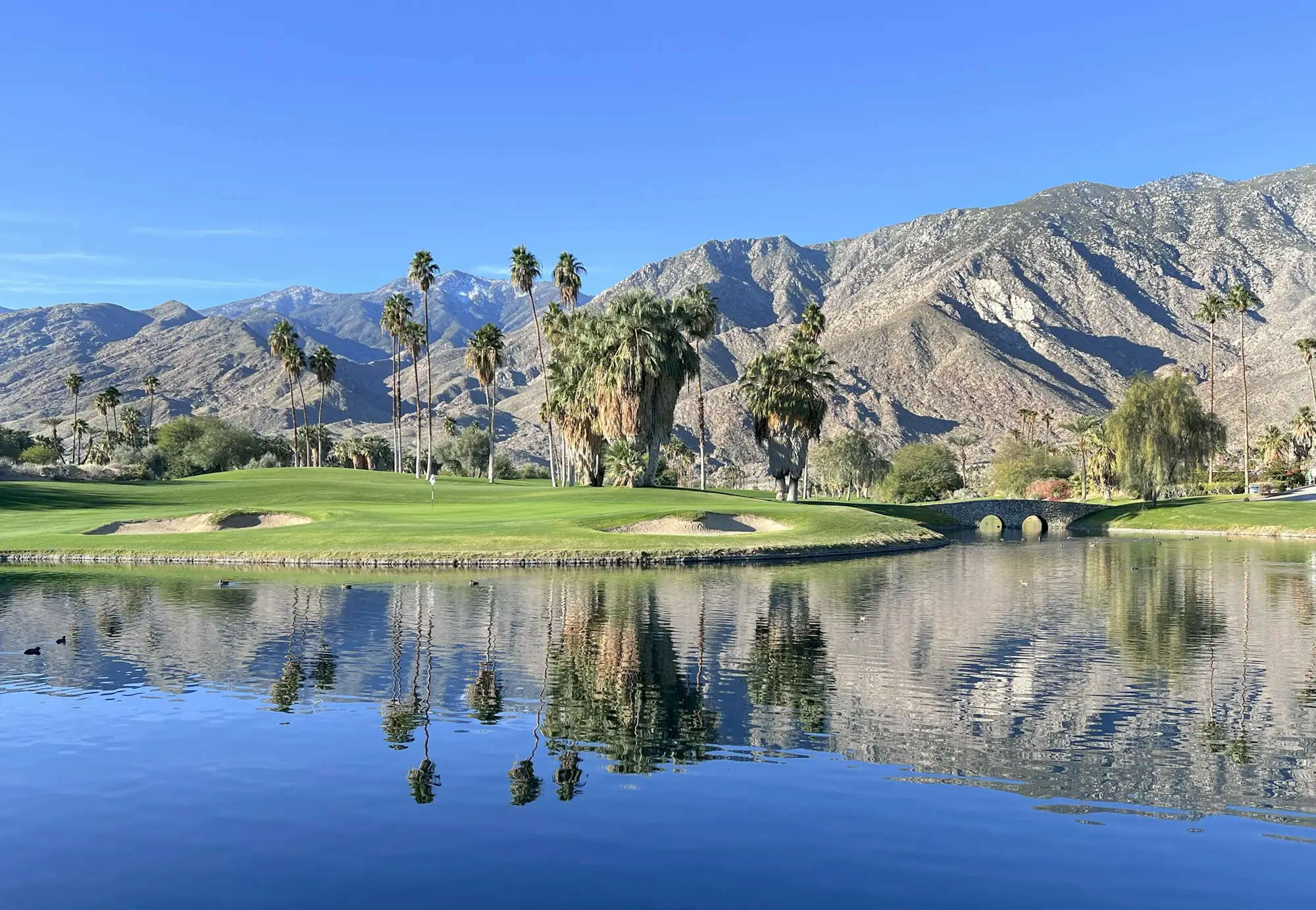
Golf course homes in Las Vegas range from fairway-side houses on busy public courses to estates inside private, guard-gated country clubs. The common thread is that you're buying a view and a lifestyle that depend on someone else's business, so the questions go beyond the house itself.
In this guide I cover the communities built around golf, how private, semi-private, and public courses differ for homeowners, membership basics, how to pick a lot that gives you the view without the broken windows, closure and redevelopment risk, and how water policy is changing desert golf. Tell me which courses you play and I'll help you narrow the field.
At a glance
- Living on a course and belonging to its club are separate decisions. Confirm both.
- Private, semi-private, and public courses change how busy your view is.
- The best golf lots balance the view against errant balls, noise, and privacy.
- Ask who owns the course and what protects it as open space.
- Water rules are reshaping turf across the valley, so expect more desert landscaping.
Which Las Vegas communities are built around golf?
Golf runs through almost every corner of the valley. These are the communities and clubs I get asked about most, grouped by area.
Summerlin and the west valley
- TPC Summerlin: a private TPC club with homes along the course.
- TPC Las Vegas: a public TPC course in Summerlin, lined in places by homes.
- Red Rock Country Club: a guard-gated community with two Arnold Palmer-designed courses, a private members' course and the Arroyo course, which has offered public tee times.
- The Summit Club: a private club community in far western Summerlin with its own course.
- Sun City Summerlin: an age-qualified community with three public courses: Highland Falls, Palm Valley, and Eagle Crest. More in my 55+ communities guide.
- Canyon Gate Country Club: an established private club in the west valley.
My Summerlin neighborhood guide covers the bigger picture.
Southwest
- Southern Highlands Golf Club: a private club co-designed by Robert Trent Jones Sr. and Jr., inside a guard-gated enclave of Southern Highlands.
- Rhodes Ranch Golf Club: a public course running through the Rhodes Ranch master plan.
- Spanish Trail Country Club: an established private club with 27 holes.
Henderson and Lake Las Vegas
- Anthem Country Club: a private, guard-gated club community in Anthem.
- DragonRidge Country Club: the private club inside guard-gated MacDonald Highlands, with hillside lots above the fairways.
- Serket (formerly Rio Secco): the Rees Jones-designed course in Seven Hills, rebranded in 2025 and operated by Cabot. It's a public course.
- Reflection Bay and SouthShore: two Jack Nicklaus designs at Lake Las Vegas. Reflection Bay is public; SouthShore is private.
North Las Vegas
- Aliante Golf Club: a public course owned by the City of North Las Vegas, running through the Aliante master plan, including Sun City Aliante.
Club status, access rules, and even names change, so I confirm current details directly with each club once a client gets serious about a community.
Private, semi-private, or public: what it means for homeowners
The course's access model affects your backyard as much as your golf game.
| Type | Who plays | What it means at home |
|---|---|---|
| Private | Members and their guests | Fewer rounds pass your yard, and members have a voice in the club. Expect initiation fees and dues if you join. |
| Semi-private | Members plus public tee times | A middle ground: membership perks, with more traffic and a wider range of skill levels on the course. |
| Public / daily-fee | Anyone who books a tee time, including visitors | No membership needed to live there, but busier fairways, early tee times, and more errant shots. |
Las Vegas has a big golf-tourism business, so public courses can stay busy, especially in the cooler months. That isn't automatically a negative. A busy, well-funded public course can be better maintained than a struggling private one. Still, stand in the backyard on a weekend morning before you decide.
Also remember that living on a course and having playing privileges are separate. Owning a home on a private course doesn't make you a member, and owning on a public course doesn't come with free golf.
Equity vs. non-equity memberships and transfer fees
If you plan to join the club, read its membership documents as carefully as the home's CC&Rs. Terms vary club by club, but most fall into a few general structures.
- Equity membership. Members own a share of the club. You pay an initiation fee or buy the membership, and the bylaws may return some portion when you resign, often only after your membership is resold to someone on a waitlist. Equity members can also be assessed for capital projects.
- Non-equity membership. The club is owned by a company or developer. You pay initiation and dues for the right to use it, with no ownership stake. Refund terms, if any, are set by the club.
- Membership categories. Many clubs offer full golf, social, and sports or fitness tiers at different costs. Social memberships may include dining, pools, and fitness without golf privileges.
- Transfers. Some memberships can transfer with the home, usually for a transfer fee. Others end with the seller, leaving you to apply fresh, possibly behind a waitlist.
- Required membership. In some communities, a membership comes with owning a home. Ask early, because it changes your true carrying cost.
Ask the club directly for its current fee schedule, bylaws, and any planned capital projects. Membership costs change, and a seller's memory of what they paid isn't a substitute.
Tell me your course and communityShare the courses you play, private or public preference, and the views you want. I'll map the communities and lots that fit.
Request a consultationViews vs. errant balls: understanding golf lot tradeoffs
Every golf lot is a trade between view, privacy, and the occasional ball. A few patterns help predict which lots get hit.
- The slice side. Most golfers are right-handed, and their most common miss curves right. Homes on the right side of a fairway, looking from the tee, tend to see more balls.
- Landing zones. The stretch where tee shots come down is the busiest. Lots well short of it, well beyond it, or beside the green typically see fewer drives.
- Tees and greens. Lots near tee boxes hear early conversation and carts. Lots behind greens can catch long approach shots but often have quieter, pleasant views.
- Elevation and setback. A lot set above the course and back from the fairway usually gets a broader view with less exposure.
- Cart paths and maintenance. A cart path along your wall means traffic at eye level. Proximity to the maintenance yard means early-morning mowers.
Many golf communities also require open view fencing, usually wrought iron, along the course. You trade some privacy for the view, so look at how existing homes use landscaping and patio placement to make up for it.
Dana's tip: Walk the backyard and look for ball marks on stucco, patched screens, and a bucket of balls by the back door. Owners rarely mention it, but the house will tell you.
Which golf lots should you look for?
Once you understand the tradeoffs, the most livable golf lots tend to share a few traits. This is the short list I use when previewing homes for clients:
- Long views down a fairway or across a water feature, without sitting in the landing zone
- A backyard facing north or east, so the patio is shaded on summer evenings
- Elevation above the course, or a deep setback from the fairway
- Mountain or city-light views beyond the course, so the view still works if the turf changes
- Distance from clubhouse parking, driving-range lights, and the maintenance yard
- A floor plan where the main living areas, not just the yard, take in the view
- Reasonable privacy from the cart path and from neighbors on either side
On hillside courses, such as those in MacDonald Highlands and Anthem Country Club, elevation does a lot of the work. Homes set well above the fairway often get the broadest views with the least exposure, though they can also be windier and see more afternoon sun on the view side.
Lot premiums on golf frontage can be substantial, and they're only worth paying if the view and the course itself are durable. That's what the next two sections are about.
Can a Las Vegas golf course close? Redevelopment risk
Golf courses are businesses, and some in the valley have struggled. Over the years, several Las Vegas-area courses have closed, and in some cases owners pursued plans to build homes on the former fairways. Those situations led to long disputes with neighbors, years of uncertainty, and dry, weedy views in the meantime.
No buyer can eliminate that risk, but you can size it up:
- Who owns the course? A master developer, the HOA, its members, a city, or a private operator. Each has different incentives.
- What's the zoning and land-use designation? Open-space designations, deed restrictions, and CC&R provisions can all affect what could be built.
- How healthy is the club? Ask about membership levels, rounds played, recent capital investment, and any plans to sell or reconfigure.
- What do the HOA minutes say? Disputes and rumors tend to show up in board minutes before they show up in the news.
A course that anchors a master plan carries a different risk profile than a standalone daily-fee course, but none is zero risk. If you want an opinion on how strong the protections in the documents are, ask a real estate attorney.
Water, turf conversion, and the changing desert course
Southern Nevada gets most of its water from the Colorado River through Lake Mead, and water policy shapes how courses look. Golf courses in the region operate under water budgets, and many have replaced out-of-play grass with desert landscaping, rock, and native plants. A state law passed in 2021 also phases out Colorado River water for nonfunctional decorative turf, such as grass in medians and many HOA common areas.
For a golf homeowner, that means a few things:
- The view may shift from wall-to-wall green toward target-style desert golf, with turf concentrated where the ball is played.
- Many courses overseed in the fall to stay green through winter, which can mean temporary closures. Practices vary by course and are evolving with water rules.
- Your own yard will almost certainly be desert landscaping, and many HOAs have been converting common-area grass too.
Some courses also irrigate with reclaimed water, which can make them less exposed to future cutbacks. Ask each course what water sources it relies on and how it has adjusted to its water budget.
Ask the course and the HOA whether conversions are planned near the lot you're considering. For more on water-wise ownership, see my post on pools, solar, and water in desert homeownership.
Buying a golf course home: my advice
Golf frontage is a premium feature, so I treat the course itself as part of the inspection.
- Visit at different times. Stand in the backyard on a weekend morning and a weekday afternoon. Listen for carts, conversation, and maintenance equipment.
- Talk to the pro shop. Ask about tournament schedules, overseeding closures, planned renovations, and turf conversion.
- Read the golf easement. CC&Rs in golf communities commonly include easements or disclosures acknowledging errant balls, noise, and course operations. Know what you're agreeing to.
- Inspect for golf wear. Check windows, screens, stucco, roof tiles, and pool equipment for ball damage, and ask your insurance agent how those claims are handled.
- Price the premium honestly. Compare recent golf-frontage sales with similar non-golf homes in the same community so you know what the view is costing you.
If you're weighing golf against other high-end options, my luxury homes guide covers hillside and waterfront enclaves without golf frontage.
Frequently asked questions
Do you have to join the club if you buy a golf course home in Las Vegas?
Usually not. In most communities, owning a home on the course and holding a club membership are separate, and you can live there without playing privileges. Some communities tie a membership to homeownership, and some memberships transfer with the home for a fee. Ask for the club's bylaws and fee schedule early, because a required membership changes your true carrying cost.
What's the difference between equity and non-equity golf memberships?
In an equity club, members own a share of the club, may receive a portion back on resignation under the bylaws, and can be assessed for capital projects. In a non-equity club, a company or developer owns the club, and members pay initiation and dues for access without an ownership stake. Terms vary widely, so read each club's documents rather than relying on the label.
Which side of the fairway is best for a golf course home?
Because most golfers are right-handed and tend to miss to the right, homes on the right side of a fairway, looking from the tee, usually catch more balls. Lots beside greens, away from landing zones, or elevated well above the course generally see fewer. Look for ball marks on stucco and screens when you tour; they're the most honest indicator.
Can a golf course near my home be turned into housing?
It has happened in the Las Vegas area, usually after a course closes and its owner seeks new zoning. Protection depends on who owns the course, its zoning and land-use designation, any deed restrictions, and the community's CC&Rs. Review those documents, read recent HOA meeting minutes, and consult a real estate attorney if you want an opinion on how strong the protections are.
Are there public golf courses inside Las Vegas neighborhoods?
Yes. Several public courses run through residential communities, including TPC Las Vegas in Summerlin, Rhodes Ranch Golf Club in the southwest, Aliante Golf Club in North Las Vegas, Serket (formerly Rio Secco) in Seven Hills, and Reflection Bay at Lake Las Vegas. No membership is needed to live on them, but expect busier fairways. My Rhodes Ranch guide covers one example in detail.
Are golf course homes in Las Vegas worth the premium?
It depends on the lot and the course. A well-run course with a durable view can support a premium, while a lot in the landing zone of a struggling course may not. Compare recent golf-frontage sales with similar non-golf homes in the same community, and weigh the club's health and water plans. I can pull those comparisons for any community you're considering.
Updated