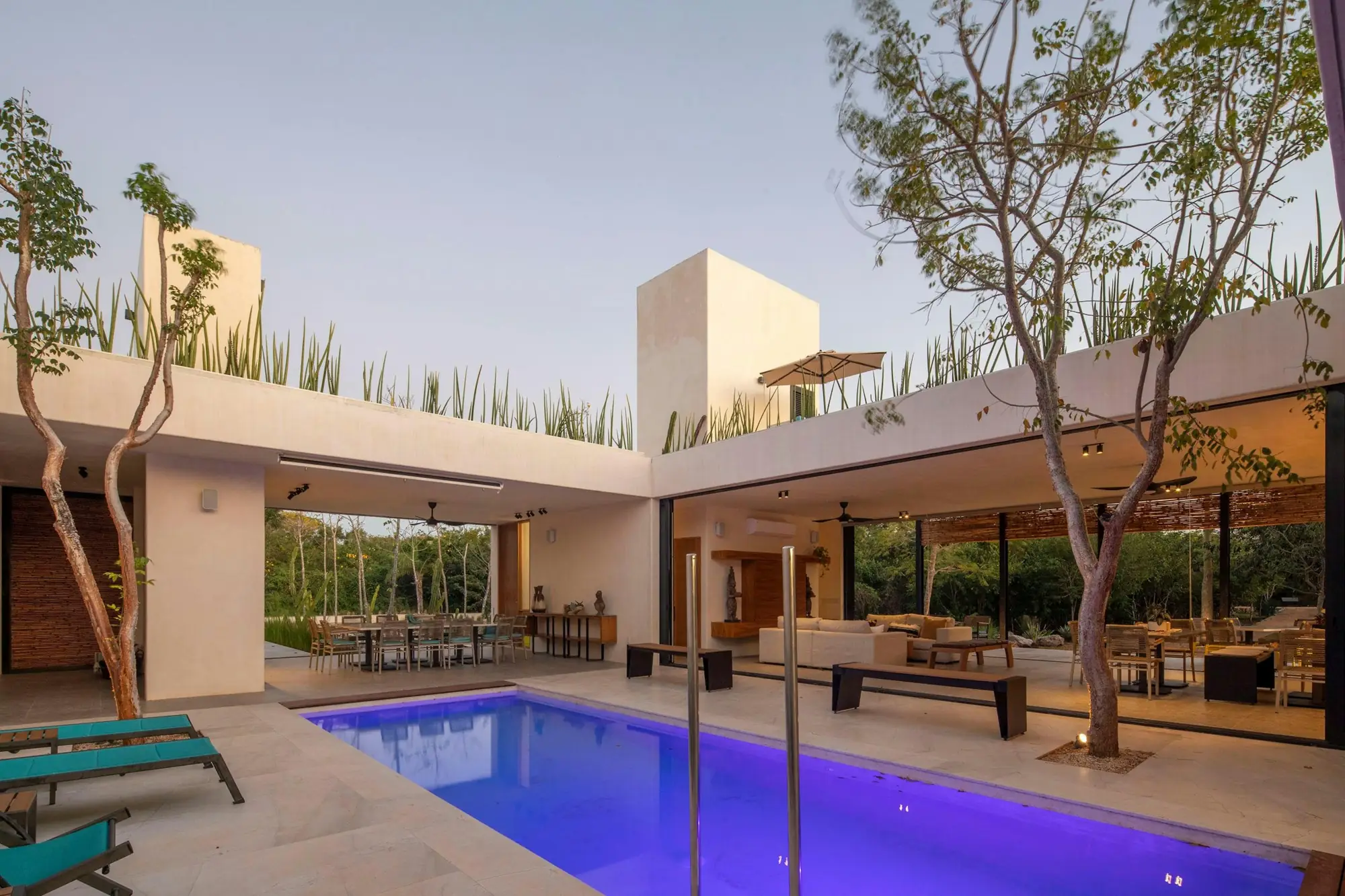
Which way should a backyard face in Las Vegas? It's one of the first questions local buyers ask, and for good reason. In the Mojave, the direction your backyard faces decides whether you can sit on the patio on a July evening, how hard the A/C works against the back of the house and how warm the pool stays in spring.
Here's how the sun actually moves over the valley, how each orientation plays out through the year, and how to check any home before you fall for it. To see the numbers for a specific exposure and month, try my backyard sun calculator, which estimates hours of direct sun on a back patio at Las Vegas' latitude.
How the sun moves over Las Vegas in summer and winter
Las Vegas sits at about 36 degrees north latitude, and the sun's path changes a lot between seasons. Three facts explain almost everything about backyard orientation here:
- Summer sun is nearly overhead at midday. Around the June solstice, the midday sun climbs to roughly 77 degrees above the horizon. With daylight saving time and the valley's position in the Pacific time zone, solar noon arrives around 12:40 p.m., so the sun spends the entire afternoon moving through the western sky.
- Summer sun rises and sets north of east and west. In June, the sun comes up roughly 30 degrees north of due east and sets roughly 30 degrees north of due west. That's why even a north-facing yard can catch low sun right after sunrise and in the last hours before sunset.
- Winter sun is low and stays to the south. Around the December solstice, the sun rises and sets well south of east and west and peaks at only about 30 degrees above the horizon. A south-facing yard gets sun most of the day; a north-facing one may sit in the house's shadow.
Heat follows the sun with a delay. The day's high temperature usually arrives in mid to late afternoon, well after the sun has passed overhead, which is why the west side of a house takes the worst of it from roughly June into September, when triple-digit highs are routine. My Las Vegas pros and cons covers what the summer heat means day to day.
North, south, east or west: how each backyard compares
Here's how each exposure behaves on a clear day, before walls, trees and neighboring homes add their own shade. Times are approximate clock times for Las Vegas.
| Backyard faces | Summer | Winter | Usually best for |
|---|---|---|---|
| North | House shades the patio through midday and most of the afternoon; low, glancing sun until about 9 a.m. and again after about 4:15 p.m. in June | Little or no direct sun near the house from fall through spring | Summer afternoons and evenings outside; less heat on the back wall |
| East | Morning sun, then shade from about 12:45 p.m. on | Morning sun until late morning, then shade | Morning coffee in the sun and shaded summer evenings |
| South | Sun from mid-morning to mid-afternoon, but high overhead, so a deep patio cover blocks much of it | Sun nearly all day, low enough to reach under the patio cover | Winter warmth; works in summer with a deep covered patio |
| West | Direct sun from early afternoon until sunset, low enough late in the day to shine under a typical patio cover | Sun from late morning until sunset | Winter afternoons; needs serious shade for summer use |
Most lots don't face a perfect compass point. A northeast-facing yard behaves much like a north or east one, with afternoon shade in summer. Southwest- and northwest-facing yards both pick up summer afternoon sun, and a northwest yard gets more of it than its name suggests. That's where my backyard sun calculator helps: pick the exposure and the month and compare the hours side by side.
Why many Las Vegas buyers prefer north- or east-facing backyards
Ask local buyers what they want and you'll often hear "north- or east-facing backyard." The reasoning is practical:
- The patio is shaded when you're home. Most people use their backyard in the late afternoon and evening, and those are exactly the hours a north- or east-facing patio sits in the house's shadow during the hottest months.
- Less heat on the back of the house. Many valley floor plans put the great room, kitchen and a wide sliding door across the back. When that wall faces north or east, it avoids the hard afternoon sun.
- Cooler surfaces. Pavers, pool decks and artificial turf in direct afternoon sun can get too hot for bare feet and paws in summer. Shaded surfaces stay usable.
The trade-off shows up in winter. Behind a two-story home, a north-facing yard can spend much of a winter day in shadow, and a pool close to the house may stay cooler into spring. The far end of a deep yard gets more sun than the patio. North-facing patios also aren't completely sun-free in midsummer: the low sun near sunrise and sunset reaches them from the side, though block walls and neighboring homes often catch much of it.
Orientation is a common item on buyers' wish lists, so it can affect how a home shows and how quickly it draws interest. But it's one factor among many, and I don't apply a set premium or discount for it. Location, the lot, condition and price matter more.
When a south- or west-facing backyard works fine
A south- or west-facing yard isn't a dealbreaker. Plenty of buyers choose one on purpose, especially when the rest of the house is right.
South-facing yards
South is the easier of the two. The summer sun is high over a south-facing yard at midday, so a solid patio cover of decent depth shades the patio and the back wall well. In winter, the low sun slips under that same cover and warms the patio and the rooms behind it. If you like sitting outside on a sunny January afternoon, south may be the better choice.
West-facing yards
West is the hardest exposure here. From early afternoon until sunset in summer, the sun comes straight at the back of the house, and by late afternoon it's low enough to shine in under a typical patio cover. What helps:
- A deeper or extended patio cover, ideally with drop shades or solar screens on the west edge
- Mature trees on the west side of the yard, which can do more than any cover once established
- Shade sails over the pool and deck
- Low-E windows and solar screens on west-facing glass
- A swimming routine built around mornings and evenings
It also depends on how you live. If you travel for much of the summer, mostly use the yard in the cooler months or simply love a warm patio in winter, a south- or west-facing yard may suit you well. Tell me how you'll use the yard and I'll weigh the orientation accordingly.
Orientation, A/C load and your power bill
The back of a home often holds its biggest windows, and the direction they face changes how much heat comes in:
- West-facing glass takes direct sun through the hottest part of the day, so the rooms behind it heat up fastest in the afternoon.
- South-facing glass gets high summer sun that overhangs and patio covers block well, and welcome low sun in winter.
- East-facing glass warms rooms in the morning, when it's cooler outside.
- North-facing glass gets the least direct sun, which helps with both heat and glare.
Window quality, coverings, insulation, the A/C system's age and the home's size all matter at least as much as orientation, so I don't predict a power bill from a compass reading. The better check is the record: on any home you're serious about, ask the seller for the last twelve months of power bills. My guide to desert homeownership, pools and solar covers the rest of the energy picture. If solar panels are part of your plan, judge the roof planes separately from the yard, since they can face a different way.
How to tell which way a listing's backyard faces
Listings don't always say, and when they do, they're sometimes wrong. Here's how I check:
- Start with the street. The front of a house faces the street, so the backyard faces the opposite way. A home on the north side of an east-west street faces south, which puts its backyard to the north.
- Use satellite view. Any mapping app's satellite view shows north at the top by default. Find the house, find the backyard and read the direction.
- Check the lot shape. On corner lots, cul-de-sacs and pie-shaped lots, the yard may wrap around the house. Clark County's online parcel maps show the lot lines.
- Use a compass in person. Stand at the back door facing out and check your phone's compass.
- Visit at the hour you'll use the yard. A 5 p.m. showing in July tells you more than any listing description.
Look at the surroundings, too. A neighbor's two-story home, a tall block wall, a slope or mature trees can shade a yard more, or less, than its orientation alone suggests. Buying from out of town? I note the orientation on every home I preview by video, and my guide to buying a home in Las Vegas remotely explains how those tours work.
Choosing a lot in a new-construction community
Buying new gives you something resale buyers don't get: a choice of lots. Builders often charge a lot premium for preferred homesites, and what counts as preferred, and what it costs, varies by builder and phase. Before you pay one, run the exposure through the backyard sun calculator and walk the lot at the time of day you'll use it.
New homes start with small trees, if any, and many close with an unfinished backyard, so you can plan the patio cover, shade and landscaping around the exposure from day one. Check the HOA's design rules before you order a patio cover or shade structure. My new construction guide covers lot selection, upgrades and inspections.
Dana's tip: Don't let orientation alone talk you out of the right house. A well-built, deep patio cover, a couple of shade trees and solar screens can make a south- or west-facing yard comfortable. Price those fixes into your offer decision instead of crossing the home off your list.
Want help comparing yards on your short list? Reach out to me and I'll note the exposure on every home we tour.
Frequently asked questions
What is the best direction for a backyard to face in Las Vegas?
Many local buyers prefer north- or east-facing backyards, because the house shades the patio during summer afternoons and evenings, when most people use their yards and temperatures peak. South-facing yards also work well with a deep patio cover and get welcome winter sun. West-facing yards take the hardest afternoon sun. Compare exposures by month with my backyard sun calculator.
Does a north-facing backyard get any sun in Las Vegas?
Yes, a little, mostly in summer. Around June and July, the sun rises and sets north of due east and west, so a north-facing yard can catch low, glancing sun in the early morning and the last hours before sunset, though walls and neighboring homes often block much of it. From fall through spring, the area right behind the house gets little or no direct sun.
Is a west-facing backyard bad in Las Vegas?
Not necessarily, but it needs a plan. A west-facing yard takes direct sun from early afternoon until sunset in summer, and the late-day sun is low enough to reach under many patio covers. Deeper covers, drop shades, shade sails, mature trees and solar screens on west windows all help. If you mainly use the yard in the cooler months, a west-facing yard may suit you well.
Does backyard orientation affect electric bills in Las Vegas?
It can, because west- and south-facing walls and windows absorb more sun than north-facing ones. But window quality, shading, insulation, the A/C system's age and the home's size often matter as much or more. Rather than guessing from orientation, ask the seller for twelve months of power bills on any home you're serious about and compare them with similar homes.
How can I tell which direction a house faces?
The backyard faces the opposite way from the street side of the house. A home on the north side of an east-west street faces south, so its backyard faces north. You can confirm it in any mapping app's satellite view, where north is at the top, or with your phone's compass at the back door. For corner and cul-de-sac lots, check the lot shape on Clark County's parcel maps.