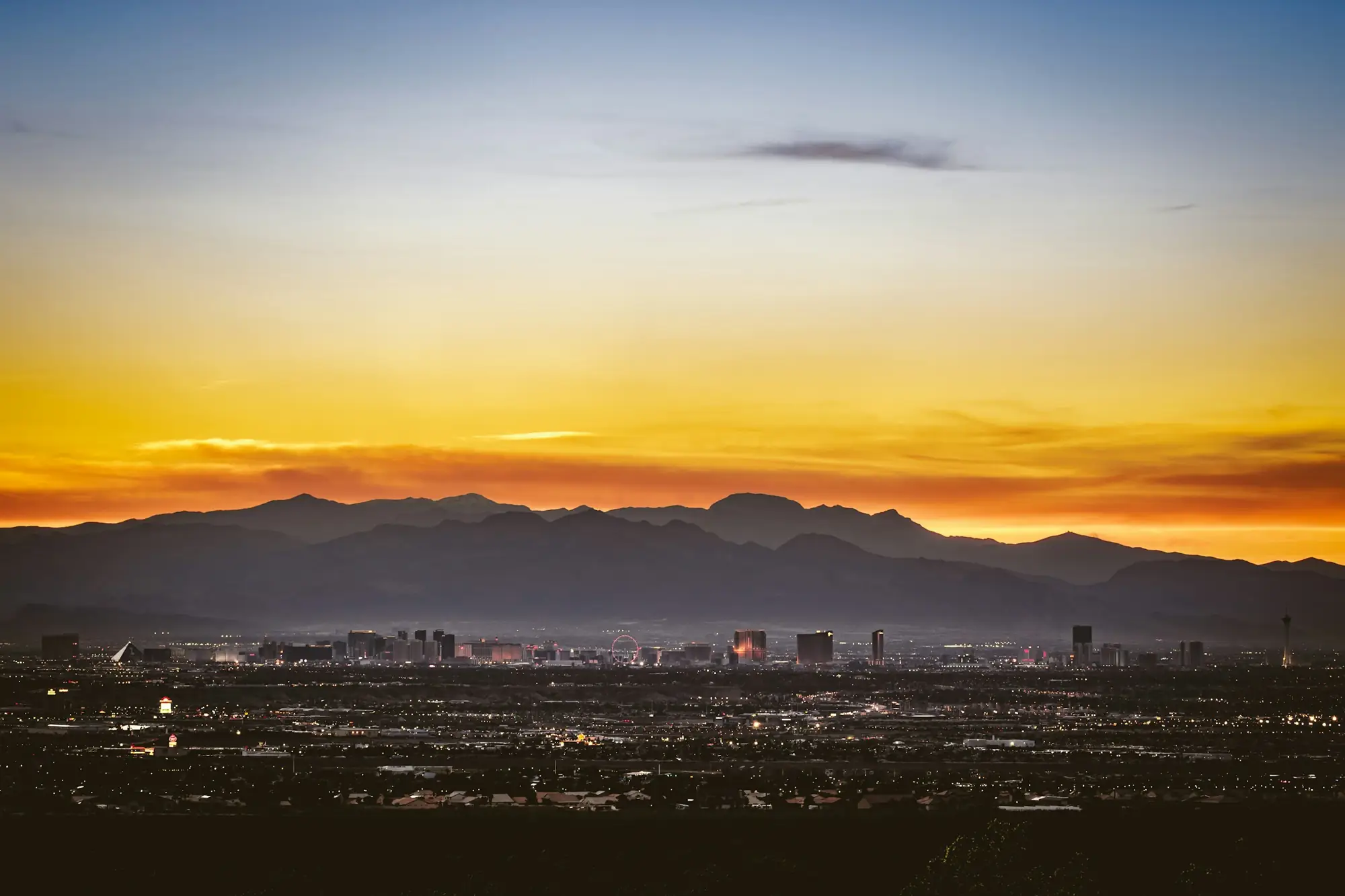
Moving to Las Vegas from Sacramento, you'll recognize more than you might expect: hot, dry summers, master-planned suburbs with HOAs and special assessments, and plenty of newer single-story homes. The differences are in the details, from how long the drive back really takes to how California treats your income and pension once you leave.
This post covers the Sacramento-specific pieces. For the statewide playbook, including Prop 13 and how to time a California sale against a Nevada purchase, see my guide to moving from California to Las Vegas.
The drive from Sacramento to Las Vegas
No single freeway connects the two, so every route is a long one. The usual path runs south on Highway 99 through the Central Valley to Bakersfield, east on Highway 58 over the Tehachapi Pass to Barstow, then northeast on I-15 into the valley. It's roughly 560 miles, and most people plan on about nine hours behind the wheel before stops.
The alternative heads over the Sierra on I-80 to Reno, then south on US-95 through central Nevada. It's usually longer, with long gaps between towns and winter weather on Donner Summit, so most movers take the southern route.
- Break it up. Bakersfield and Barstow are natural stopping points, and many people split a moving-truck drive over two days.
- Mountain weather. The Tehachapi Pass can see snow and strong wind in winter, and Donner Summit regularly has chain controls. Check road conditions before you leave.
- Desert heat. Services thin out between Barstow and the state line. In summer, start early, carry water and check your tires and cooling system.
- The return trip. Sunday afternoons heading back into California on I-15 often back up near the state line.
Flights between Sacramento and Las Vegas
For visits, flying usually wins. Sacramento International has frequent nonstop service to Harry Reid International Airport, and the flight is roughly an hour and a half. That makes it practical to fly back for a weekend, an appointment or a few days in the office.
If you'll fly often, where you live in the valley matters:
- Closer to the airport: Green Valley, west Henderson, Silverado Ranch and the southwest valley are often about 10 to 25 minutes away off-peak.
- Farther out: Summerlin, Centennial Hills, Skye Canyon and east Henderson add time, especially for early-morning departures.
Las Vegas is on Pacific time, so your calendar and meeting schedule don't change.
California taxes, pensions and state jobs
Nevada has no state personal income tax. For many Sacramento households, that's the biggest number in the decision, and my California to Nevada tax calculator gives a quick estimate of what the switch could mean for your income.
As the state capital, Sacramento has many current and former public employees, which raises a few specific questions:
- Pensions after you move. Federal law bars states from taxing most retirement income of nonresidents, and the Franchise Tax Board's pension guidance says distributions from qualified and governmental plans received after you become a nonresident generally aren't taxable by California. Governmental plans include public pensions such as CalPERS and CalSTRS. Confirm how your specific benefits are treated.
- Working for the state from Nevada. California's state telework rules have changed in recent years, each department sets its own policy and bargaining-unit contracts can control. Get any out-of-state work arrangement approved in writing before you buy.
- Retiree health coverage. Ask CalPERS or your plan administrator which health plans are available at a Nevada address before you set a move date.
- The move year. Expect a part-year California return, and know that California can still tax California-source income afterward, such as rent from a home you keep or a gain on a California sale.
On the property side, your Prop 13 basis stays behind. In Nevada, an owner-occupied primary residence gets a 3% cap on annual property tax increases once you claim it. I'm not a tax advisor, so take this list to a CPA before you set dates. My Las Vegas vs. California cost of living breakdown covers the rest of the budget.
Sacramento Valley heat vs. Mojave heat
You already know triple-digit days. The difference is how long they last and how little relief the nights bring.
| Sacramento | Las Vegas | |
|---|---|---|
| Summer days | Hot and dry, with heat waves over 100 degrees | Hotter and longer; highs regularly top 100 degrees from roughly June into September |
| Summer nights | The Delta breeze often cools the evenings | No Delta breeze; midsummer nights stay warm |
| Rain | A real wet season in winter and spring | Very dry; a fraction of Sacramento's yearly rainfall |
| Winter | Cool and damp, with tule fog | Mild, sunny days, cool nights and occasional frost |
| Storms | Winter rainstorms | Late-summer monsoon thunderstorms with wind, dust and flash flooding |
Two practical changes follow. Your yard shifts from lawn and shade trees toward desert landscaping, since water is the valley's limiting resource and the Southern Nevada Water Authority sets a seasonal watering schedule. And shade becomes the priority: a covered patio and a north- or east-facing backyard make summer evenings far more usable. Check any home's exposure with my backyard sun calculator.
The payoff is a sunny winter without tule fog, and cooler air within reach. Mount Charleston is within about an hour of much of the valley when the valley floor heats up.
Where Sacramento buyers often look in Las Vegas
If you're coming from Roseville, Folsom, Elk Grove or Natomas, Las Vegas master plans will feel familiar: planned villages, parks and trails, a master HOA plus a sub-association, and newer homes from national builders. I match areas to the property and logistics you need, but a few patterns come up often:
- Newer master plans: Summerlin on the west side, Skye Canyon in the northwest, and Inspirada and Cadence in Henderson all have newer homes and active builders, much like the newer parts of Folsom or west Roseville.
- Established neighborhoods: if you like older Sacramento areas with mature trees, look at Green Valley in Henderson or west-side neighborhoods such as Peccole Ranch and Desert Shores.
- Golf communities: buyers leaving a golf community like Serrano in El Dorado Hills often look at Summerlin's golf communities, Southern Highlands or Anthem in Henderson.
- Age-qualified 55+ communities: if you know Sun City Roseville or Sun City Lincoln Hills, you'll recognize Del Webb's Sun City Summerlin and Sun City Anthem, along with newer 55+ communities. My 55+ communities guide compares them.
- More land: if you're used to a larger lot in south Sacramento County or Placer County, look at areas like Lone Mountain in the northwest, where half-acre lots, horse properties and streets without an HOA are still common.
Two construction differences to expect. Most homes here are stucco with tile roofs, block walls around the yard and no basement. And newer subdivisions usually put a lot of house on a compact lot, so if yard size matters, we'll target established areas on purpose.
Flood zones, HOAs and SIDs: what carries over
A few Sacramento habits translate well:
- Check the flood map. In Sacramento, flood risk often means levees and river basins. In Las Vegas, it means flash flooding in washes and low streets during summer storms. The valley has an extensive network of flood channels and detention basins, but some homes still sit in FEMA flood zones. Check the zone for any address and get insurance quotes early in escrow.
- Mello-Roos has a cousin. Nevada's Special and Local Improvement Districts, known as SIDs and LIDs, finance infrastructure in newer areas and add an assessment that's separate from your HOA dues. Check each parcel; my guide to Las Vegas HOA, SID and LID fees shows how.
- HOAs are the norm. Most newer neighborhoods here have one, often two layers, even outside gated communities. Read the rules on RVs, solar, rentals and landscaping before you write an offer.
My advice for a Sacramento-to-Las Vegas move
- Fly in for a scouting trip that includes a weekday, and test the airport drive from your top areas.
- Take your pension, payroll and move-date questions to a CPA before you set a closing date.
- If you'll keep working for a California employer, get the remote arrangement in writing.
- Visit once in summer, so you know how a July evening feels without the Delta breeze.
- Ask for twelve months of power bills on any home you're serious about.
- Get homeowners insurance quotes for the specific address early in escrow.
Dana's tip: Once you live here, the clock starts: Nevada gives new residents 30 days to get a Nevada driver's license and register their vehicles. Build that into your first month along with utilities and your property tax cap claim. My Las Vegas move planner schedules all of it backward from your move date.
When you're ready to compare areas, reach out to me and I'll plan a tour around your flight schedule.
Frequently asked questions
How long is the drive from Sacramento to Las Vegas?
Roughly 560 miles, or about nine hours of driving without stops, on the usual route: Highway 99 south to Bakersfield, Highway 58 over the Tehachapi Pass to Barstow, then I-15 into Las Vegas. The alternative over I-80 to Reno and down US-95 is usually longer. Many people split a moving-truck drive into two days and fly for visits after that.
Are there nonstop flights from Sacramento to Las Vegas?
Yes. Sacramento International has frequent nonstop service to Harry Reid International Airport, and the flight takes roughly an hour and a half. If you'll fly back often, Green Valley, west Henderson, Silverado Ranch and the southwest valley keep the airport drive short. Summerlin and the northwest add time, which matters most for early-morning departures.
Will California tax my CalPERS pension if I move to Nevada?
Generally, no. Federal law bars states from taxing most retirement income of nonresidents, and the Franchise Tax Board's guidance says distributions from qualified and governmental plans received after you become a nonresident generally aren't taxable by California. Nevada has no state personal income tax. The timing of your move and the details of your benefits matter, so confirm your situation with a CPA before you set dates.
Is Las Vegas hotter than Sacramento?
Yes, and for longer. Both have hot, dry summers, but Las Vegas highs regularly top 100 degrees from roughly June into September, and there's no Delta breeze to cool the evenings, so midsummer nights stay warm. Las Vegas also gets far less rain. Winters are milder and sunnier, without tule fog, and spring and fall are the most comfortable seasons.